Tuesday, August 29, 2006

Kinds of Hypnotized Horse Acts


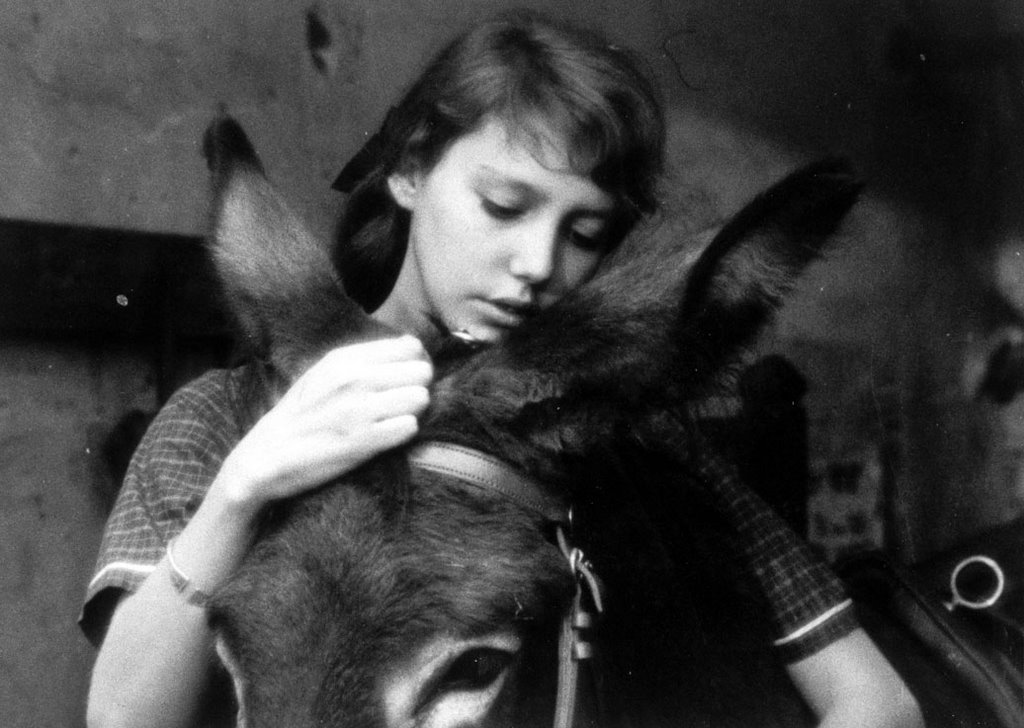
The ordinary or simple hypnotized horse act is not very notable. It’s something of a time killer at best. Even for people familiar with horses the horse does nothing remarkable, nothing a un-hypnotized horse might do just as well, with the right training. Most acts begin with a few of these: some counting, nodding, neighing.

The next level of hypnotized horse act is a little more interesting and complicated, because the horse does something that takes a lot of training whether or not it is actually hypnotized. Advanced though it is, it still overlaps with the high end of well-trained horse acts and still begs the question of what it means to have hypnotized a horse. Typical: standing on hind legs, tightrope walking, using a knife and fork.

The genre of the hypnotized horse act really comes into its own with the advanced tricks. Here the horse is doing something that it is normally so disinclined to do, the audience readily assents that it must be, in fact, hypnotized. Typically this involves sitting in a chair, (silently) reading the paper, light acrobatics, playing more than one instrument.

Master hypnotized horse acts are usually saved for the finale of the best shows commonly seen, if that (actually, most acts proceed no further than the intermediate level at best, which leads to the general apathy about the acts as a whole). In these the horse does something generally regarded as impossible by those unfamiliar with hypnotized horses. These include such things as short improvised speeches in human languages on a subject of the audience’s choosing, crude magic tricks, climbing trees and short and very limited bursts of flight. This will immediately prompt the question for many in the audience as to who, really, has been hypnotized.

Hypnotized horse acts of the Grand Masters, are, in fact, hard to see and quite poorly documented. Nonetheless, in what accounts we have of them, they continue themes and acts of the Master Acts: the horse may answer more complicated questions, or debate a learned member of the audience on a subject of their particular expertise. The horse may cruelly follow on this by making some of it’s points in a precise mimicked impersonation of a person familiar to the speaker, or even their own voice. This mimicry, though often comedic, generally fills the audience with horror. Chess tournaments are rare, for, if accounts are to be believed, the horse acquit themselves only passably, always opening with N-KB3. Though in Master hypnotized horse acts, the points made by the horse can be light to quite specious, in Grand master acts the horses are diabolical advocates, often on controversial or unacceptable theses. This is only made worse by any kind of mathematical or logical act, in which the horses often “prove” illogical or incoherent propositions. This part of the act is generally characterized as a nightmare. If the horse has demonstrated a particularly impossible or unthinkable proposition, such as the possibility of division by zero or the non divinity of Christ, some audience members may object strenuously that they are dreaming or themselves hypnotized, to which the horse may reply mockingly in the voice of their father. It is about this time that calls upon the Grand Master himself to stop this outrage become universal. The Grand Master, it must be noted, has been stiff and wholly motionless for the duration of the act. Spirited theatre goers who further swarm the stage are advised that upon approaching the Grand Master they are likely to be surprised by his stiff and irregular appearance, only to discover upon closing, that the figure in a tuxedo is little more than a scarecrow and the gilded theatre, little more than an empty field at night. The wind blows. You are naked. The horse stands there. You have never seen one before. The horse regards you. It snorts and flicks its tail to ask: who are you? But you have no words at all to reply.

TURN #77: WEEK 63; WORDS: 66,933
NEXT BY 6 SEPTEMBER 2006

Monday, August 21, 2006

Stories I Wrote to Girls Who Never Wrote Back III: Ed Harris Won't Leave Me Alone


I awoke in an unfamiliar bed to Ed Harris tapping on the window. I put some shorts on and came out to the yard: it was bright out. Ed had a fistful of old GI Joe comic books and an open thing of cheap salsa. He was going on about something, about going somewhere to finish something. All I could think was: where are the chips? The thing about Ed is he has those eyes and his winning ways. You can never tell if he’s drunk or not. He’ll do something crazy and be sober as a lord. Or you’ll be driving with him or at the library or the courthouse and not realize a thing until you hear the -shhht of a beer opening. I can’t tell today. Why is Ed here? Suddenly Ed’s destination today becomes clearer; he’s talking about Switzerland, though for some reason, he wants/needs to make the journey by boat. “Ed,” I say “I gotta go to work today.” Which is a total lie because I’m not even really sure where I am. To make it seem realistic, I go over and pick up a newspaper lying in the driveway. It is an old shopping circular that is sopping wet, though I tuck it under my arm anyway to look like I am starting my day. Ed just laughs and gives me a half empty bucket of chicken, though instead of chicken there are the modified triggers and sears from a semi-automatic rifle, though it still smells like chicken. This makes me hungry. We say our goodbyes; Ed is still laughing, almost running in place. As I turn to go back in I remember: Ed and I did go partying. That was three days ago. I didn’t see him after the first night. I go back into the welcome dark of this messy home and notice, for the first time, a big guy sprawled out on the couch wearing what looks like Egyptian-themed maternity wear. I hope to go he’s not the reason I’m here. I go back to bed.

Later, I find the chips. They’re in my mailbox at home, long with a rubber boot and some sporty women’s underwear.

We are in a drugstore, ostensibly because Ed has a cold. Ed likes to try the remedies as he goes down the aisle. It is something of a tasting party. He dusts his tongue with Theraflu like it was Pixie Sticks. He keeps using the expression “worm”: “Worm up!”; “Worm to the Motherland”: “Where you at Worm?” My head is exploding from inhaling whatever gas Ed keeps in that mask and tank in the car. He spills a lot of Flintstones vitamins sorting through an economy sized jar of them looking for Dinos to bite the heads off. He slips and falls. He cries: “Willlll-mma! Get this cat offa me!” Eventually this leads to some intercession by the pharmacist. Ed pulls up to the window, like at a bar and says: “So, whatcha got?”

Ed is checking out some lingerie. “You know what I’m seeing?” he says “I’m seeing some itty bitty mosquitoes in that tent. You know what I mean.” He repeats this about five times. Until he finds a teddy and then starts saying: “This one, this one, this is for a big ol’ woman. This is for a bear woman. A big old woman with purple hair and a case of diet shasta sitting on top of a bean bag chair with is half-filled with weed from her mid-level dealer boyfriend who works at the Co-Op and makes banana bread but never cleans up.” Ed then sings an authentic Indian song he was taught at Columbia. “Hey pretty ladies,” calls Ed, “would you both like to model these for me?” “Ed,” I say, “we’re in Wal-Mart. That other woman is her mother.”

It is always a disaster going with Ed to a strip club, but the worst was the time he brought that snow shovel.

After we put out the fire in the car we had to sit there in the smoke and the piss because it was fucking freezing out with nothing but Drum to smoke and I wanted to cut my lips off. I tried to tell Ed: Ed I’m sick. Ed, I’m tired. Ed, I have grey hairs on my balls and I can’t do this anymore. I mean it’s been a scream, but I feel sick most of the time and I can’t keep the gyros down and I’m sick of Old Gold and brown phlegm and dirt and yelling and stealing so little and paying so much, and man, I love you man, but I’m dying, I’m dying and I just feel tired all the time and the shot of Jager isn’t making it and I don’t want to wake up in the morning; I hurt, I shake, only a little, but what the hell and Ed looks at me and he says do this, do this one shot with me: you are a Lord, feel your majesty, take your office and serve alongside me, robed in fleas and rags, blessed with vomit, stand alongside me, we, chosen for the blessing of mankind.


TURN #76: WEEK 62; WORDS: 66, 258
NEXT BY 30 AUGUST 2006

Monday, August 14, 2006

My Nietzsche


for Rs

Just the other day I was looking at Kaufmann’s introduction to Thus Spoke Zarathustra when I came across this fact: Nietzsche and I are the same height. In that instant I grasped it all: I am a giant.

I have a different perspective on human life because I gaze down upon it like an eagle from the towers of five foot eight. Does the thunder frighten you? It is merely our laughter, the laughter of we titans, we five foot eight Hyperboreans.

In all probability, I could walk in Nietzsche’s shoes; I weigh 66 kilos; I could wear his overcoat -the overcoat of the Father of the Overman. I could fit into his suits. I would wear them with no underwear in a Revaluation of All Values! Naked like a child!

Listen as I mock this Wagner CD! And kiss this horse!

Nietzsche was a lonely man; if you doubt this, read Thus Spoke Zarathustra; Zarathustra has disciples; he leaves them; he comes back; he leaves them; in the end he spends time in bed talking to his animals. I, too, spend time in bed talking to my stuffed animals.

We are lonely: because we stand at the five foot eight peaks of wisdom, a horizon from which we can see the coming of that which justifies Man, the Overman. We carried our ashes to the mountains. We return bringing our fire to the valley. This has met with mixed results.

In all of Zarathustra’s wanderings, in his questings, -no where does he find any hint of a girlfriend, unless that girlfriend be eternity herself, wedded with that nuptial ring of rings, the eternal return, which is really more of a personification and so there is really no hint of a girlfriend and everything will repeat itself exactly as it has happened, with fire-dogs, dwarves, hunchbacks, tarantulas but no girlfriend.

I, too, go everywhere in my student’s coat, and here and there slap somebody on the shoulder and say, Siamo contenti? Son dio ho fatto questa caricatura.

I, too, have had Caiphas put in fetters, Wilhelm, Bismarck, and all Anti-Semites abolished.

For in the end, I would much rather have been a Basel professor than God; but I have not dared push my private egoism so far as to desist for its sake from the creation of the world, You see, one must make sacrifices however and wherever one lives.

Tomorrow my son Umberto will come with the lovely Margharita, whom, however, I shall also receive here only in shirtsleeves. The rest is for Frau Cosima -Ariadne -from time to time there is magic.


You may make any use of this letter which will not degrade me in the eyes of those at Basel.


TURN #75: WEEK 61; WORDS: 65,396
NEXT BY 23 AUGUST 2006

Monday, August 07, 2006

A Short, Yet Wholly Inadequate and Unworthy Guide to Grovelling


Apologize to those loved ones you've offended here.


Alas, the age of the apology is past. One could formerly get away with just about anything, provided one apologized for it sufficiently. Even one’s victims, when acknowledged, became forgiving, even flattered. Apology is a true sign of civilization: it deflects harm with rhetoric, it is the triumph of wit and cunning and dramaturgy over dull justice. Justice requires no imagination but the opposite; retribution is mere exchange [footnote], but the apology is transformative. It is, in highest sense, art. The greatest dullard can go the gallows as easily as a cow to the slaughterhouse, but only a man of civilization can plead for his life -and get away with it.

The apology is tied into the essence of our civilization, our modernity, for it presupposes a unique soul that can repent. A good apology has insight, understanding, introspection -authenticity, sincerity. In short, it is proof of modern subjectivity and its mythology of free choice and conscience: it is deontological. Its very idea is essential to the modern idea of universal peace.

And yet the age of apology is past, perhaps because our civilization is in true decline. Today we have reverted to primitive ideas that are really too crude to be Old Testament. The important thing today is to punish. Somebody. And all the time. It really matters very little what the original reason was or if there ever was a reason: when you punish someone long enough, this becomes reason enough: they start to look like bad people and by the end of the process you are sure they must be. People are no longer interested in reasons because they are no longer interested in thinking.

Time was that truth and reconciliation were so important that one could even commit war crimes and pay only the penance of admitting to them. Whereas everyone came to formerly agree that apologizing was good, making one the “better man” and children were taught to apologize, groveling, apology’s ecstatic sibling, never enjoyed a vogue. This, however, is part of groveling’s success and effectiveness, as we shall see.

The merest human interaction is offensive, odious and torturous without groveling. Show me a man who can get through an entire day without saying “Sorry I’m so late” and I will show you a total savage, irredeemably primitive in his ignorance of punctuality, or the pleasures of not being prompt. If you are ever at a dinner party and the host or hostess does season the food with apology (“I’m sorry your steaks are so huge, it was all they had”) you can be sure that you are supping with wild barbarians, total cannibals who may kill and eat your baby without asking.

The ideal grovel is seductive. It is invisible and transparent. It is charismatic: indeed, it is messianic, in that it redeems and transforms an unworthy situation. It restores hope to an otherwise hopeless situation. The potentially offended party is so distracted and redirected from their own feelings, expectations and situation that the idea of being offended strikes them as totally unthinkable. Ideally, the grovel takes them out of their lives all together and, like a romance, involves them entirely in the life of the groveler.

The ideal grovel is an unconditional surrender that goes one better; it adds conditions so onerous and unthinkable that the victor feels unreasonable and a little embarrassed. Indeed, victory itself has become unbearable. War will probably never become unthinkable; but some apologies certainly are. This indeed is the secret of groveling; it is something so shameful and degrading that neither party can really admit it happened; in this sense, it never really happens; in this sense, it is truly magical, a happy ending, a deus ex machina -ex nihilo. This is why groveling never enjoys a vogue; because it is always in vogue, it is the secret currency of the world, but unlike gold or oil it cannot be seen or viewed. It is the most secret lust and debauch whose satisfaction and desire is never spoken of.

Apology is rational, sometimes necessary and highly appropriate. Groveling is irrational, theatrical and tactically inappropriate. Apology may genuinely signal repentance and a change of heart, the beginning of understanding and the end of conflict. Groveling is that conflict continued by extraordinary and inverse means.

Blessed are the grovelers; they may not be the bringers of true peace or understanding, but they are easier had than either.

[Note: Indeed, retribution is caught up in a mythology exchange and “the same.”]


Sorry this post isn't up to snuff; next week will be better.


TURN #74: WEEK 60; WORDS: 64,931
NEXT BY 16 AUGUST 2006